
 Image 1 of 1
Full Description:
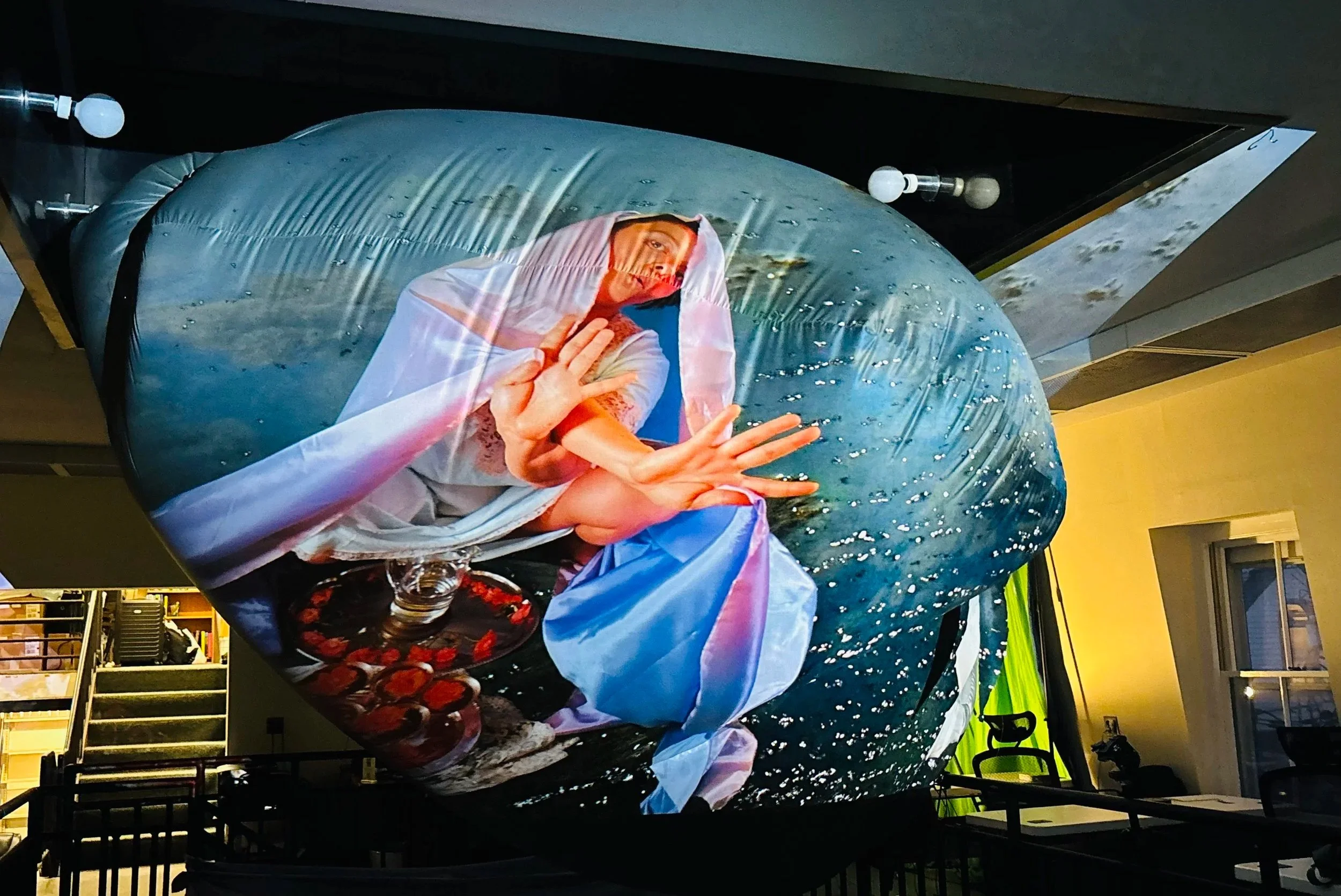
Building on ideas introduced in the first workshop, participants will explore how moving images can extend beyond the screen to become part of sculptural and architectural environments. Through an accessible introduction to projection mapping, the workshop demonstrates how light, form, and space can work together to create immersive visual experiences.
Participants are invited to work with imagery created during the first workshop, bring their own videos, or experiment with sample materials provided during the session. The group will explore simple editing techniques to prepare video material in DaVinci Resolve before learning how projection mapping allows digital images to respond to the unique shapes of inflatable sculptures and architectural surfaces.
Rather than treating inflatable forms as passive projection screens, participants will discover how sculptural surfaces become active collaborators in the creative process. As images wrap across curves, seams, and changing volumes, familiar materials are transformed into dynamic installations that investigate the boundaries between sculpture, light, and moving image.
Throughout the workshop, Arvid Tomayko and Wyona Gene will guide participants through a series of demonstrations, creative prompts, and conversations exploring projection as an artistic medium. Together, participants will consider how artists use light to reshape space, create atmosphere, and build immersive environments that invite new ways of seeing familiar materials.
Working collaboratively, participants will project their compositions onto a series of inflatable sculptures while experimenting with scale, placement, and composition. The emphasis is on curiosity, observation, and play, encouraging participants to think about projection mapping as another creative material rather than simply a technical process.
The workshop will introduce MadMapper as a projection mapping software, while welcoming participants who already use other platforms. No previous experience with projection mapping is necessary, and the techniques introduced are intended to provide an approachable foundation for continued experimentation in installation, exhibition design, and expanded media practice.
Participants are encouraged to bring:
A laptop (best if you would like to work independently, but a limited number of computers are available) or iPad
Video clips or images you'd like to experiment with (optional)
Work created during Workshop One (optional)
A video projector (optional - a limited number of projectors are available)